THE ART OF BLUE
Blue cheeses are polarizing, pungent, and visually striking. Characterized by intricate networks of blue, green, or grey mold veins, they represent a daring collaboration between cheesemaker and fungus.
The Magic of Piercing
The iconic veining in cheeses like Roquefort, Stilton, and Gorgonzola does not happen by accident. While the spores of Penicillium roqueforti are mixed into the curds early in the process, they require oxygen to flourish. To achieve this, the wheels are pierced with long stainless steel needles (a process known as needling) a few weeks into aging.
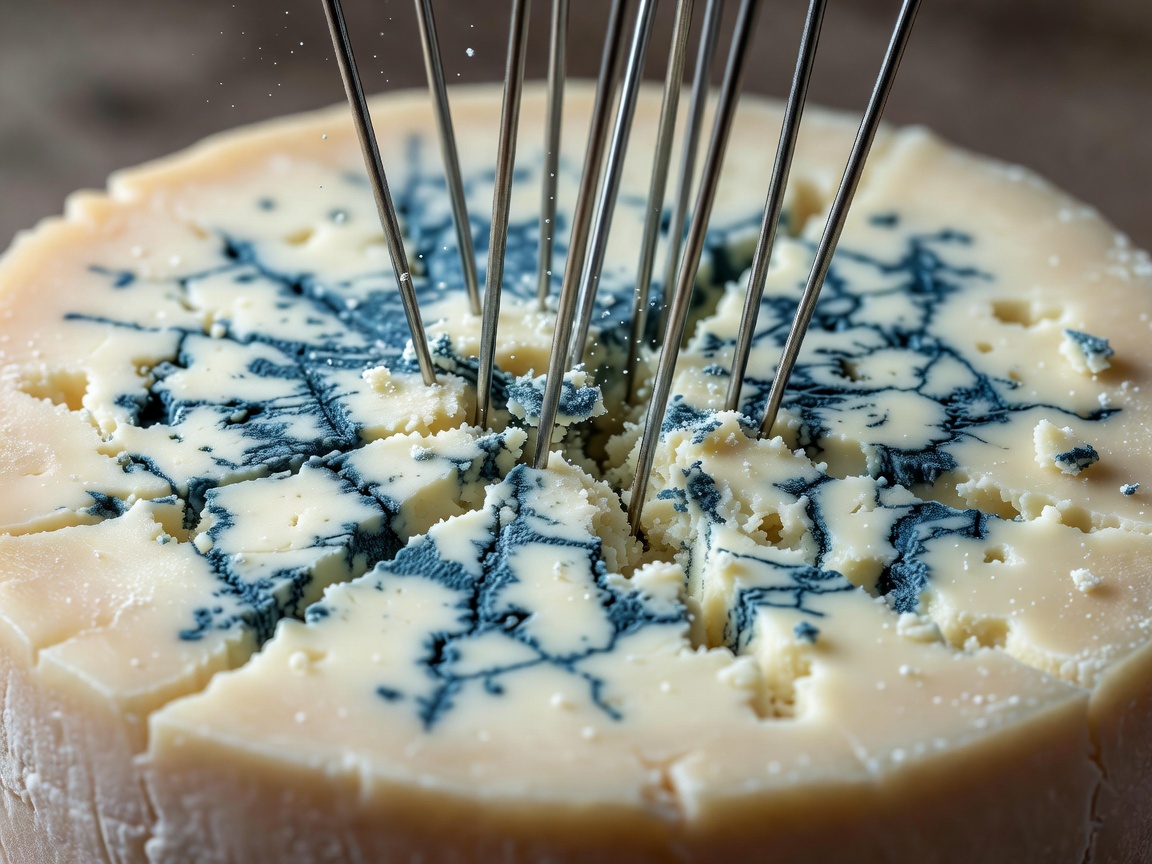
These air channels act as microscopic chimneys. Oxygen flows in, allowing the dormant mold spores to awaken and spread, following the fissures between the loose curds. As the mold grows, it initiates rapid lipolysis—the breakdown of milk fats—which generates the sharp, spicy, and metallic flavor profiles unique to blue cheese.
"A great blue cheese balances the aggression of its mold with the inherent sweetness of its milk."
The Roquefort Caves
Perhaps no blue cheese is as legendary as Roquefort. By French law, it must be made from raw sheep’s milk and aged exclusively in the natural limestone caves of Roquefort-sur-Soulzon. The unique geography of these caves includes 'fleurines'—natural faults in the rock that pull cool, moist air from the surface down into the cellars, maintaining a constant temperature and humidity perfectly suited to Penicillium roqueforti.