FRESH DAIRY TRADITIONS
Fresh cheeses bypass the aging caves entirely. They are meant to be consumed days, sometimes hours, after they are made. Because they lack the complexity born of prolonged enzymatic breakdown, fresh cheeses rely entirely on the absolute quality of their source milk and the immediate skill of the cheesemaker.
Pasta Filata: The Art of Stretching
The Italian tradition of pasta filata (spun paste) is responsible for Mozzarella and Burrata. The curds are steeped in hot whey or water until they become elastic. Artisans then manually stretch and knead the hot curds, aligning the protein structure to create a smooth, fibrous, and stringy texture that tears beautifully and melts flawlessly.
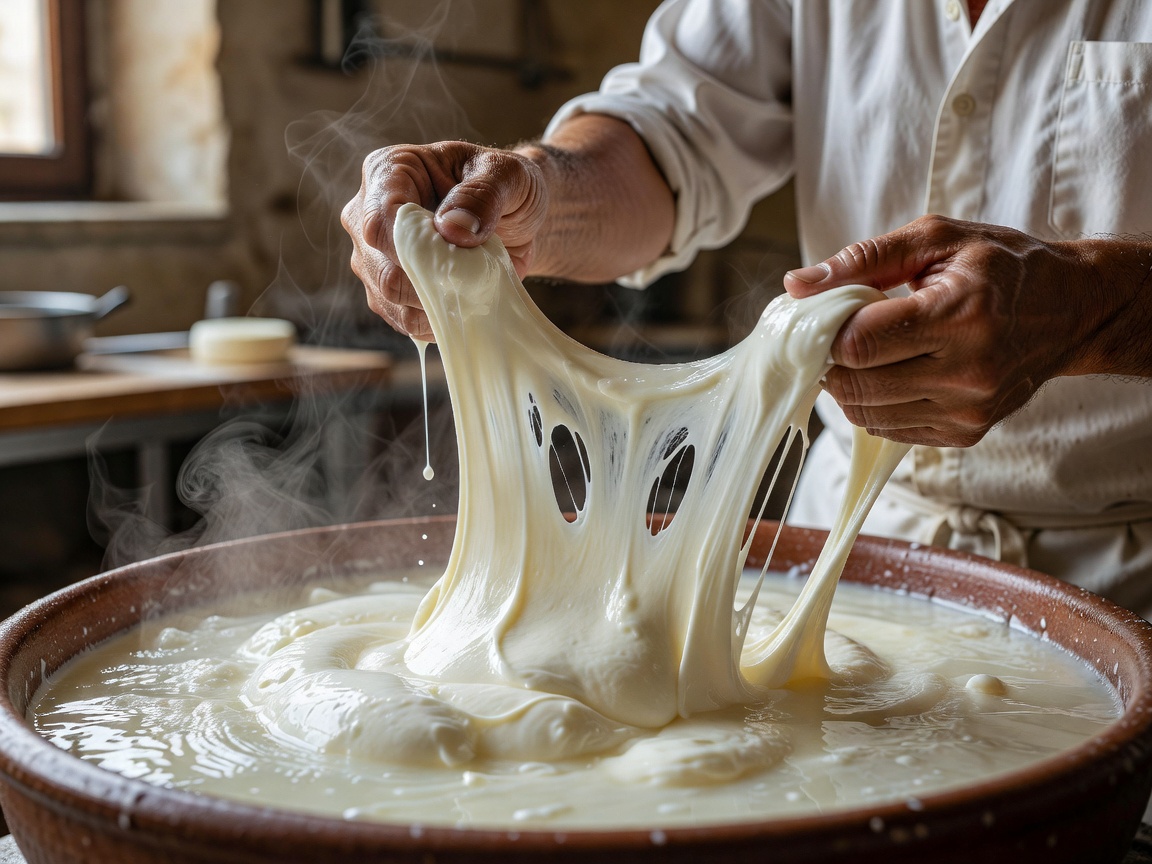
True Mozzarella di Bufala, made from the rich, fatty milk of domestic water buffalo, offers a tangier profile and softer texture than its cow's milk counterpart, showcasing the immediate impact of animal breed on the final product.
"With fresh cheese, there is nowhere to hide. It is the dairy equivalent of eating a tomato straight from the vine."
Brined and Preserved
In warmer climates, where fresh milk spoils quickly, traditions like Feta and Halloumi evolved. Feta is a brined curd cheese from Greece, traditionally made from sheep's milk or a blend of sheep and goat. Submerging the fresh blocks in a salty brine not only preserves the cheese for months but also halts bacterial growth, locking in a bright, acidic, and salty profile that defines Mediterranean cuisine.