FRENCH SOFT CHEESES
The category of soft, bloomy rind cheeses represents a triumph of controlled fungal growth. Originating largely in the northern regions of France, these cheeses depend on a delicate ecosystem of molds, yeasts, and bacteria to develop their signature downy white exteriors and paste-like interiors.
The Role of Penicillium Camemberti
The defining characteristic of true Camembert de Normandie or Brie de Meaux is the introduction of Penicillium camemberti. This white mold is either added directly to the milk or sprayed onto the surface of the formed curds.
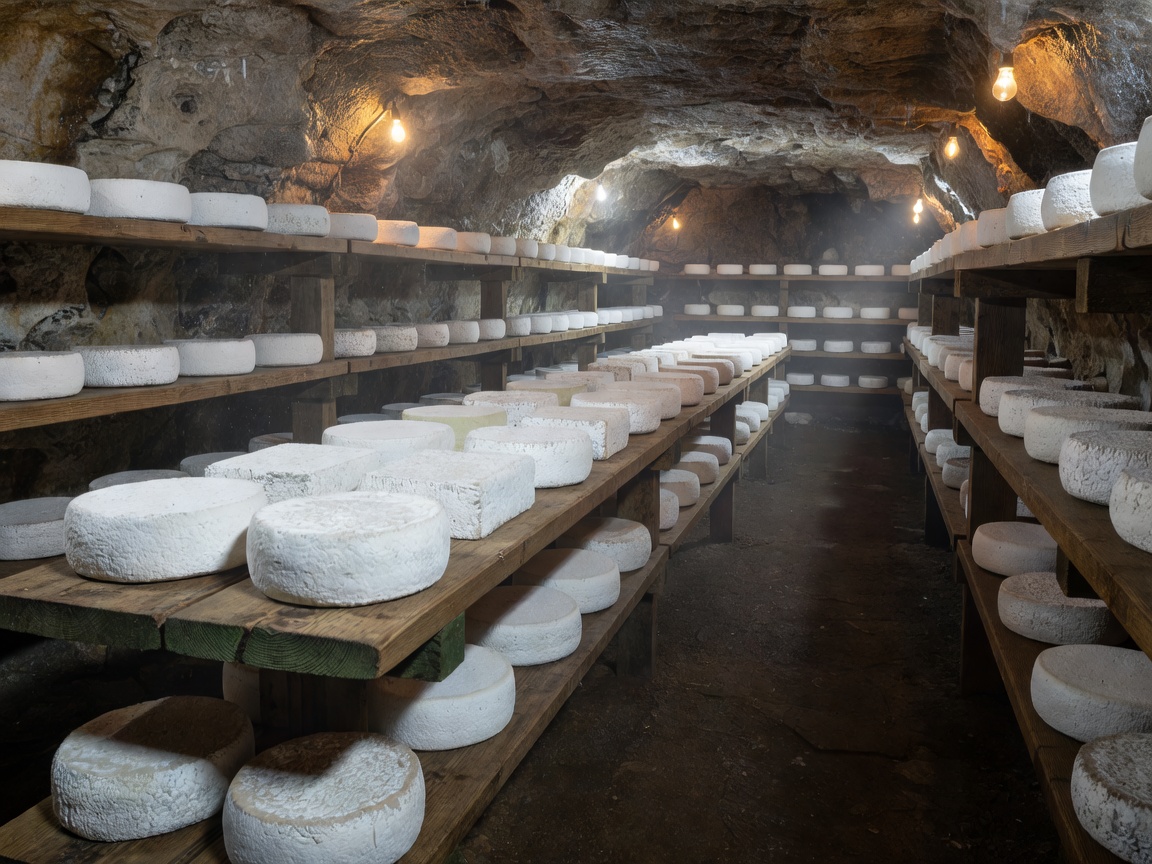
As the cheese ages in cool, humid caves (hâloirs), the mold blooms outward. More importantly, it secretes enzymes that migrate inward, breaking down the robust milk proteins. This proteolytic action transforms the chalky, acidic curd into a fluid, buttery paste that slowly approaches the rind.
"A perfect bloomy rind yields to the touch, offering a scent of wet stone, mushroom, and fresh cream."
Washed Rinds: The Pungent Cousins
While bloomy rinds are gentle, washed-rind soft cheeses like Époisses or Munster take a different path. During maturation, their exteriors are periodically washed in brine, marc, or beer. This suppresses common molds and encourages Brevibacterium linens (B. linens). This bacterium creates a distinctive reddish-orange hue and an intensely pungent aroma, while the paste inside remains mild, sweet, and incredibly supple.