SWISS ALPINE BLENDS
Hard cheeses are defined by their low moisture content, a result of pressing, cooking the curds, and extended aging. The most revered among them are the mountain cheeses of the Alps, such as Gruyère, Comté, and Emmental, forged by centuries of transhumance traditions.
The Copper Vat Tradition
In traditional alpine cheese production, milk is gently heated in massive copper vats (chaudières). Copper is essential; its exceptional thermal conductivity ensures even heat distribution, and microscopic traces of copper transfer to the milk, regulating fermentation and preventing bitterness during the long maturation process.
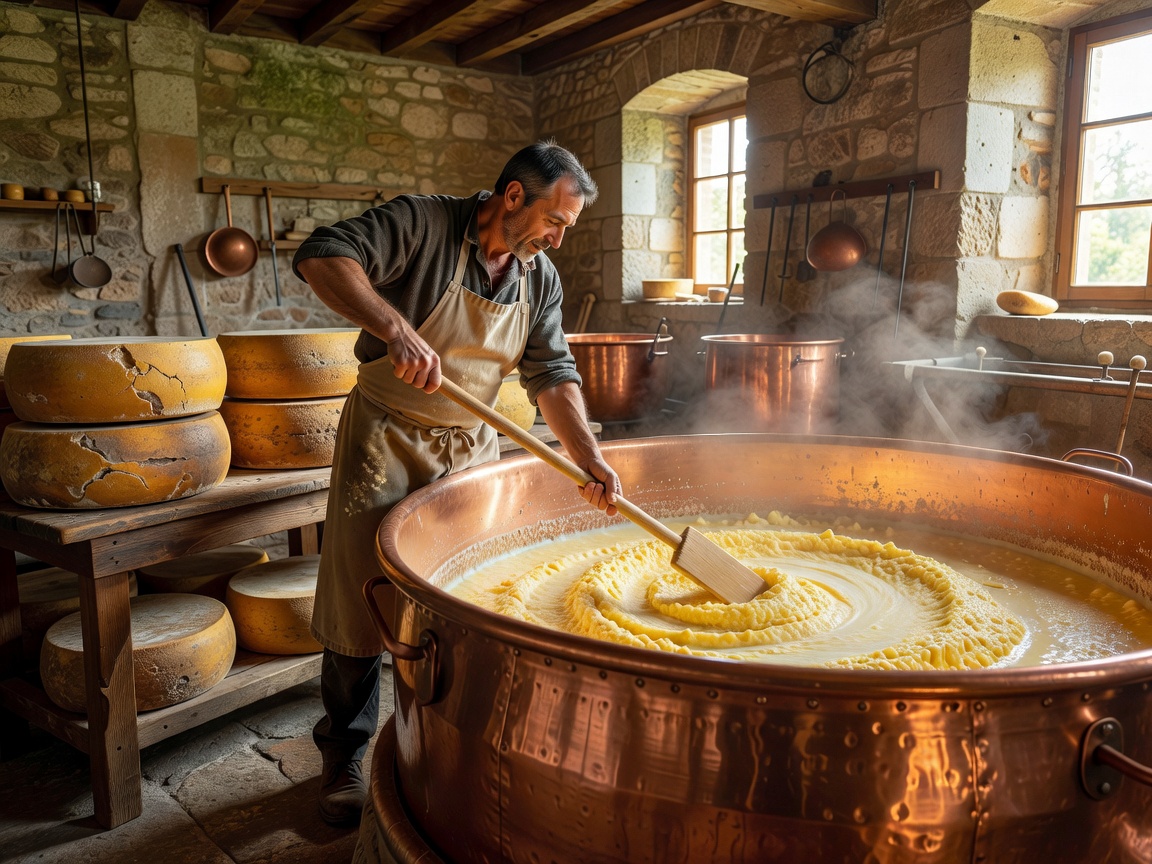
After the curds are cut into fine grains to expel moisture, they are gathered in cheesecloth and pressed into heavy molds. The resulting wheels can weigh upwards of 80 pounds, designed originally to concentrate a summer's worth of milk into a durable form that could survive the long, harsh mountain winters.
"The crystalline crunch found in an aged alpine cheese is the physical manifestation of patience."
The Science of Tyrosine Crystals
As these colossal wheels age—sometimes for 24 months or more—moisture evaporates, and flavors intensify. The breakdown of proteins yields amino acids, specifically tyrosine. When moisture levels drop significantly, tyrosine can no longer remain dissolved and precipitates into small, crunchy, white crystals scattered throughout the paste. Often mistaken for salt, these crystals are highly prized indicators of a well-aged, robust hard cheese.